
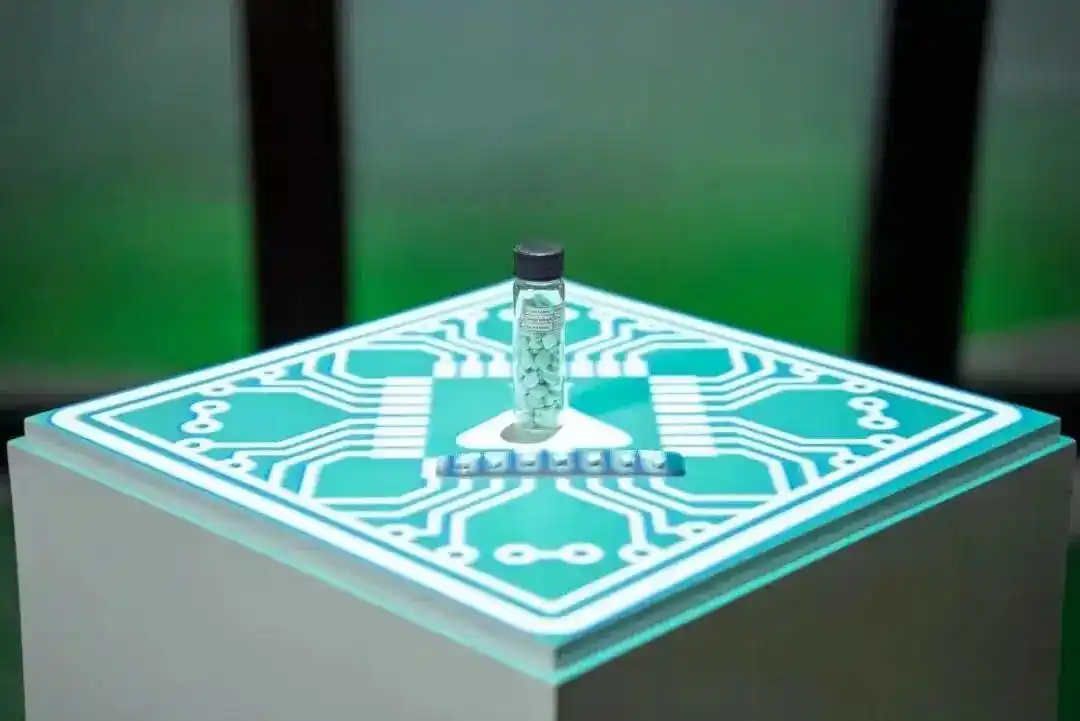
On September 10, 2026, a patient at Peking Union Medical College Hospital in Beijing received a dose of an unusual drug. The first participant in a Phase III clinical trial took rentosertib, a small-molecule drug developed by Insilico Medicine. AI had been used both to identify its novel target and to design the molecule from scratch. That same day, Shanghai Pulmonary Hospital enrolled its first participant in the trial. This marked the first time a drug candidate discovered through an end-to-end AI-driven process had reached Phase III clinical trials anywhere in the world. Following Phase I safety testing and preliminary evidence of efficacy in Phase II, the drug has now entered the final major stage of clinical testing before an application for approval. Initial results are expected in 2029.
Just over two months earlier, at the World Artificial Intelligence Conference (WAIC), MatwingsVenus™ (晓鹜™), Matwings’ lightweight AI Design Platform for Biology, was named one of the event’s standout exhibits—the only AI for Science product selected. The platform lets researchers conduct protein R&D through a conversational interface.
Cataya Bio, founded in Shanghai’s Zhangjiang district in 2021, took its first product, bisabolol, from a laboratory strain to commercial production in less than two years. Its automated design–build–test–learn (DBTL) platform helped deliver a product with purity above 99% and exceptionally low levels of potentially allergenic impurities. Compared with bisabolol produced through plant extraction or chemical synthesis, it offers a cleaner impurity profile and greater safety in cosmetic applications.
Three examples, all connected to Shanghai. They span different fields but share a common foundation: biomanufacturing.
At China’s annual Two Sessions, biomanufacturing was identified as a priority among the country’s industries of the future. According to the Ministry of Industry and Information Technology, China’s biomanufacturing sector now generates approximately RMB 1.1 trillion in total output, while the country accounts for more than 70% of global fermentation product output.
Backed by a strong research base, a deep pool of scientific talent and sustained policy support, Shanghai has developed a biomanufacturing industry layout centred on “one core and two wings.” As practical barriers to industrial scale-up persist, the city is also exploring how best to bring advances in biomanufacturing from the laboratory into commercial production.
A New Approach to Protein Design
Designing a Key to Fit the Lock
Matwings grew out of a problem familiar to researchers in biology. Traditional protein design follows a familiar cycle: review the literature, form a hypothesis, run experiments, fail and start again. Developing a high-performance protein can take three to five years and tens of thousands of experiments, with a success rate below 1%. “It’s like looking for a needle in a haystack,” said Liu Hao, co-founder and CTO of Matwings.
Since its founding, Matwings has amassed tens of billions of protein sequences and hundreds of millions of high-quality functional annotations. A distinguishing feature of this dataset is its extensive coverage of samples from extreme environments. Understanding how proteins perform at extreme pH levels, pressures and temperatures is essential for industrial applications. “Conditions inside living organisms are relatively mild. But once a protein is used in an industrial product, it may have to withstand all kinds of extremes.”
Using this dataset, Matwings trained a large AI model for protein design. The model became the foundation of MatwingsVenus™ (晓鹜™), launched in April 2026, which allows users to design proteins through conversation. Users describe what they need, and the system breaks the request into tasks and coordinates more than 500 protein design tools to carry them out. The platform shortens development timelines from two to five years to two to six months, reduces the number of experiments from tens of thousands to around 100, and raises the success rate to over 30%.
TNIK, the drug’s target, was also identified with AI assistance. Starting with multi-omics data from patients with fibrosis, the team compared patient data with those of healthy individuals to identify overactive genes and establish their links to specific diseases. Previously published Phase II results in Nature Medicine showed that participants receiving high-dose rentosertib experienced an improvement in forced vital capacity, rather than the decline associated with disease progression.
In conventional drug development, early-stage research typically takes four and a half years, while the average cost of bringing a drug from discovery to market has risen to US$2.23 billion. Insilico Medicine’s nomination of a novel drug candidate in just 18 months points to a potential path for the industry: using advanced technologies to reduce costs and accelerate development.
The Gap Between Design and Delivery
Fast Computing, Slow Validation
But speed is not everything, and AI is no cure-all.
“AI delivers the greatest efficiency gains in preclinical research,” said Ren Feng, offering a measured assessment of its limits.
AI can now rapidly identify targets and design molecules and microbial strains. Wet-lab validation, process scale-up and regulatory approval, however, still move slowly. These remain practical hurdles for AI-driven biomanufacturing.
A protein designed by Matwings showed a fourfold improvement in alkali resistance under extreme conditions of pH 13–14, doubling the service life of the chromatography resin incorporating it. Yet that does not mean it can move straight from the laboratory to the production line. “Some problems are impossible to anticipate at the design stage, and we cannot always explain them,” said Liu Hao. Between an AI-generated design in the digital world and a functional molecule in the physical world lies another essential step: biosynthesis.
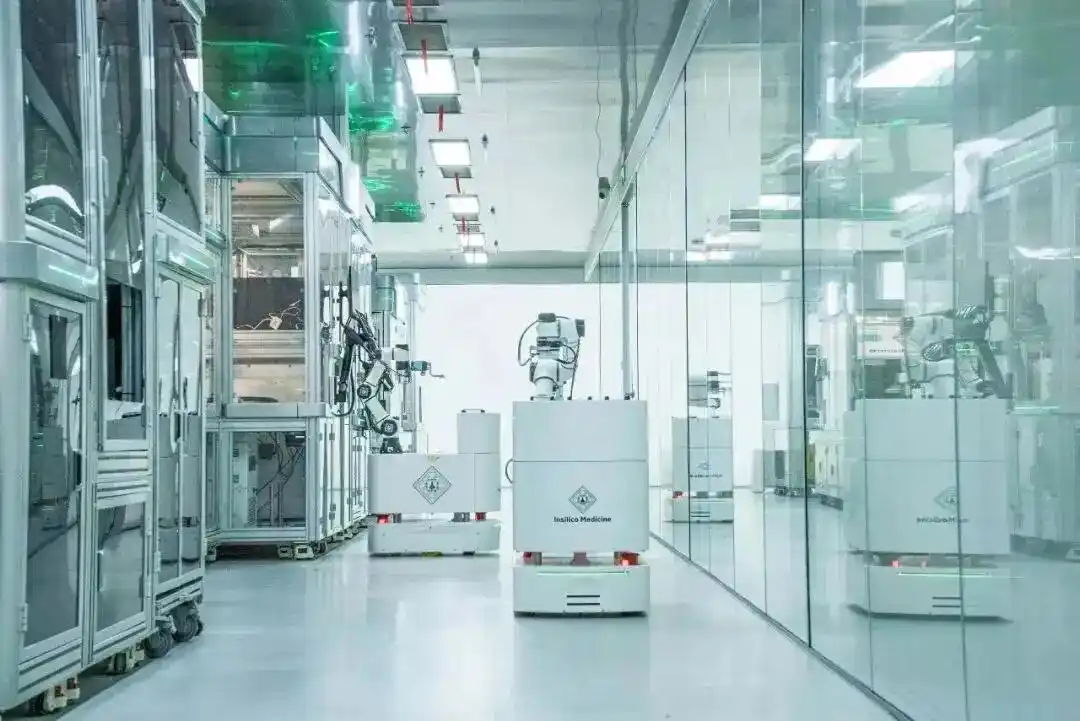
To address this, Matwings built an automated laboratory that handles plasmid construction from protein sequences, protein expression and purification, and functional testing. The resulting data are then fed back into the model to support further refinement. Data show that an automated laboratory can improve design efficiency by a factor of 7.2 while generating highly standardized data—a key reason for Matwings’ investment in laboratory automation.
The challenges of moving from laboratory development to commercial production extend beyond protein engineering. Cataya Bio, which develops ingredients through synthetic biology, faces similar hurdles. Its automated, AI-enabled design–build–test–learn (DBTL) platform took bisabolol from strain development to commercial-scale ingredient production in less than two years. AI primarily improved efficiency in two areas: iterative strain screening and fermentation process optimization. “Much of biology remains unknown. AI cannot fully decipher the complex workings of living organisms,” Wang Rui, vice president of Cataya Bio, told IT Times. An automated platform can narrow the scope of trial and error and produce high-performing laboratory strains. Once those strains enter large fermentation tanks, however, yields can still fluctuate.
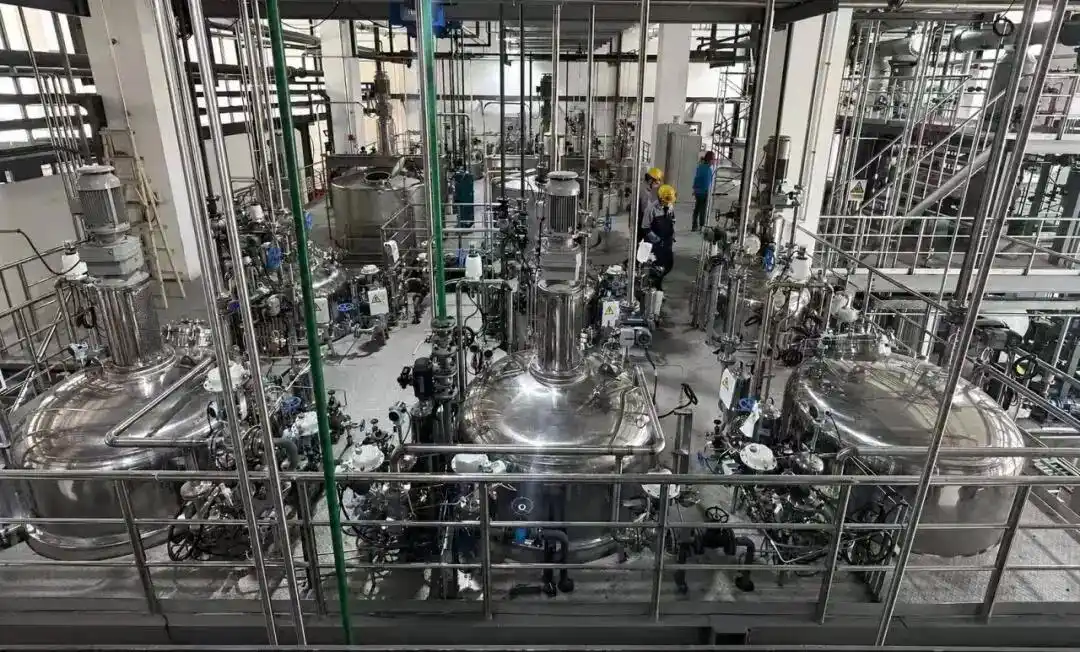
Recognizing the substantial gap between laboratory development and commercial production, Cataya Bio adopted a model combining R&D in Zhangjiang with manufacturing in Qidong. Its research team remains in Shanghai, drawing on the city’s talent, research resources and access to customers. Manufacturing is located outside the city to avoid Shanghai’s high land, energy and raw material costs. Experimental data from R&D are integrated with the Qidong production system, allowing process issues encountered during manufacturing to inform further optimization at the Zhangjiang laboratory.
Scale-up is only the first hurdle. For products entering global markets, regulatory compliance presents another barrier that AI cannot remove. Even when strains and production processes are ready, food and nutrition ingredients must still undergo lengthy regulatory reviews across multiple jurisdictions. For Cataya Bio’s human milk oligosaccharide pipeline, for example, requirements differ from country to country, and the full safety assessment and approval process takes two to three years—a timeline that is difficult to shorten with AI.
An Ecosystem of Support
Bringing Partners Within Reach
“This is where Shanghai’s opportunity lies,” said Jin Qinxian, chairman of the Shanghai Synthetic Biology Innovation Center, at the Future Health Industry Conference and Synthetic Biology Innovation Industry Summit. Connecting hospitals, laboratories, factories and regulators in a single network, he argued, offers the city a way forward.
Talent is the foundation. Cataya Bio has an R&D team of 60 to 70 people, the vast majority recruited from Shanghai’s universities and research institutions. “If we can’t find the people we need in Shanghai, it will only be harder elsewhere.” For a synthetic biology company whose competitive strength rests on its platform strains and product portfolio, access to a concentrated pool of researchers directly affects how quickly its pipeline advances.
Another frequently cited advantage is the proximity of potential partners, supported by Shanghai’s “one core, two wings” approach to developing its synthetic biology industry. Zhangjiang serves as the innovation hub, Baoshan focuses on R&D and pilot-scale development, and Jinshan concentrates on large-scale manufacturing. Specialized clusters, including Greater NeoBay and Oriental Beauty Valley, provide further support.
Across Shanghai’s biomanufacturing sector, a common pattern is emerging: R&D stays close to talent and research institutions, while pilot and commercial production move to suburban areas with sufficient environmental capacity, available land and the administrative support needed for project approvals.
Alongside this geographical division of work, companies also need something more immediate at critical moments: funding.
In 2019, Insilico Medicine established its drug discovery and development center in Zhangjiang Pharma Valley in Shanghai’s Pudong New Area. Ren Feng still recalls the company’s pivotal Series E financing in 2025, when investment in the biopharmaceutical sector was subdued. With strong support from the Pudong New Area government, Pudong Development Group and Pudong Venture Capital co-led the round, attracting additional investors and bringing the total raised to US$123 million. The funding supported further development of Insilico’s AI platform and multiple clinical programs, while laying the groundwork for its subsequent Hong Kong listing as the market’s first AI drug discovery company.
Cataya Bio has also benefited directly from Shanghai’s industrial support policies. It has received subsidies for innovative small and medium-sized enterprises from the Shanghai Municipal Commission of Economy and Informatization, as well as dedicated funding for AI applications in synthetic biology from the Science and Technology Commission of Shanghai Municipality. “For a startup, this means the government shares some of the costs,” Wang Rui said. “It allows us to keep investing in strain screening and process refinement—research that takes time to pay off but determines our long-term competitiveness.”
Challenges to Growth
Models Are Available. Clear Data Rules Are Harder to Find.
Shanghai’s biomanufacturing companies benefit from the city’s industrial ecosystem, but they also face bottlenecks across the value chain.
“Access to shared computing resources is one form of support we would really welcome,” Wang Rui told IT Times. Computing power is a basic requirement for AI-driven biomanufacturing. Training large models for applications such as protein engineering, and running algorithms for strain design and biosynthetic pathway design, all require high-performance GPU clusters—a substantial investment for companies purchasing their own equipment. For synthetic biology companies advancing several product pipelines at once, demand for model training is continuous and growing. Access to shared computing resources needs to keep pace with algorithm development.
Policy is beginning to address this need. Shanghai’s first catalog of digital public services, released in August 2026, includes synthetic biology among 12 integrated industry solutions. It brings together eight computing service offerings, including cloud GPU instances, computing pools within industrial parks and integrated computing appliances.
An even more immediate hurdle is data ownership and security. AI models for protein design rely on wet-lab data accumulated by companies. The standardized protein sequences and functional annotations generated by Matwings’ automated laboratory are critical to the accuracy of its models. Yet once these data leave a company’s systems, clear rules on ownership and access are still lacking.
“The ownership questions extend to AI models. Once a model has learned from the data, who owns the resulting intellectual property? There is no clear answer yet,” Liu Hao told IT Times. For now, companies must rely on trade secret protection. When considering industry-wide data sharing or collaboration across institutions, they remain uncertain about how rights to derivative data generated through model training would be allocated.
In Liu’s view, companies will only feel confident sharing their data if ownership rights receive government recognition and protection comparable to that afforded to patents. Otherwise, each company will continue to guard its core data, limiting the development of large models.
Clinical sample data come with more specific restrictions. China has substantial clinical resources, but rules governing human genetic resources prevent companies with foreign investment from directly accessing Chinese individuals’ sequencing data. Insilico Medicine has adopted a workaround: “The data stay in the hospital; the algorithms come to them.” It deploys its AI platform at Shanghai Pulmonary Hospital, where hospital staff carry out the data mining. This is, in essence, a compromise. The company cannot train its models directly on the data and must instead rely on the hospital’s computing environment for analysis, limiting both efficiency and analytical depth compared with direct data sharing. “Making de-identified data available would be much more helpful for AI-driven target discovery,” Ren Feng said.
Shanghai’s value lies not only in producing promising AI-designed proteins and novel drug molecules, but also in tackling the industry’s practical challenges—pioneering approaches to computing access, data rights, pilot-scale infrastructure and regulatory coordination. If these efforts succeed, they will give the city the capabilities to take innovation from algorithms to production lines, shaping how far its industries of the future can grow.