
Reprinted from China Economic Weekly
Reporter: Xie Wei
"If younger schoolmates ask me for study advice, I would say: first, get good at language and writing." Tan Yang, lead developer of the MatwingsVenus™ Agent project at Matwings Technology, told our reporter.
Coming from a Gen Z technologist, this answer is somewhat unexpected.
In many people's minds, protein R&D is a field with an extremely high barrier to entry: complex models, lengthy experiments, expensive equipment — accessible only to large research institutions and leading enterprises. In Tan Yang's view, however, this industry landscape is being rewritten as AI + biomanufacturing accelerates.
What Tan Yang and the young team around him are trying to do is make AI a research "partner" and lower the barriers to R&D.
Not long ago, Matwings Technology, where Tan Yang works, released the dialogue-driven protein R&D agent MatwingsVenus™ (Xiaowu™). Through this agent, researchers state their requirements as naturally as chatting, and the agent completes industry research, database retrieval, and protein design, then connects to automated experimental validation and result iteration. Processes that used to require multiple teams working in relay are now reconnected into a single flow.
In his eyes, the significance of such tools is not just improving efficiency — more importantly, it gives more young people the opportunity to enter the biomanufacturing track.
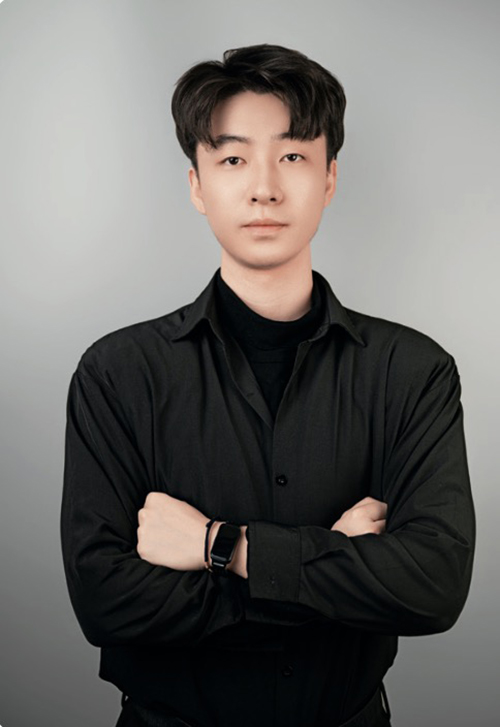
Tan Yang, Lead Developer of the MatwingsVenus™ Agent Project, Matwings Technology
01 "R&D capability is becoming shareable"
Biomanufacturing is regarded as one of the key directions for future industries. Whether it is innovative drugs, functional foods, agriculture, or bio-based materials, all depend on the R&D and design of biological components such as proteins, enzymes, and microorganisms.
The field Tan Yang works in — protein design — is one of the most cutting-edge directions in biomanufacturing. In the past, it was a field heavily dependent on "craftsmanship": a mature researcher needed more than 10 years of training to independently design functional proteins.
But now, AI is changing the face of this industry. Through dialogue-driven agents, non-professionals can also complete parts of the work, from industry research and data analysis to experimental design. The agent automatically decomposes tasks, invokes tools, and even connects to the experimental validation stage.
"An important change brought by AI is that some capabilities that were once highly scarce can now be accessed in a more inclusive, widespread way," said Tan Yang. In the past, to understand a frontier direction, you might have to read through dozens of papers — and hope you understood them correctly. Now, you can hand a paper to AI and it will interpret it clearly for you within minutes.
Knowledge barriers have not completely disappeared, but the threshold for acquiring and understanding knowledge is falling. And at a deeper level, some work that could only be done by large institutions is starting to become "shareable."
A key idea behind MatwingsVenus™, launched by Tan Yang's team, is to connect design and validation as tightly as possible. The platform not only helps users complete front-end research and protein design, but also links the results into automated wet-lab experimental workflows, allowing design proposals to receive experimental feedback as quickly as possible before entering the next round of optimization. In this way, R&D no longer stays at the level of "paper-based reasoning," but forms a closed loop much faster.
In a de novo design project targeting an immunoregulatory receptor, Matwings Technology used the platform to successfully obtain dozens of novel binder molecules with in vitro cell-blocking activity, completing the full closed loop from design to validation.
And in a complex multi-site mutation project on the sweet-tasting protein Monellin, the platform employed the strategy of "Agent design — automated experimentation — AI feedback — Agent redesign" to progressively narrow the search space and optimize candidate sets. Through continuous iterative optimization, it generated 24 representative candidate sets and obtained multiple superior candidate variants. Several samples achieved sweetness more than tenfold higher than the wild type, while thermostability remained in the high range of around 75°C.
The two cases share the same underlying approach and demonstrate the agent's real-world capability to accelerate innovative protein drug R&D.
In the past, this kind of work often required multiple teams dividing responsibilities and switching back and forth between different tools. Today, it can be reorganized on a single platform. For young researchers and startup teams, this is not just an efficiency gain — more importantly, R&D capability is no longer so out of reach.
For Tan Yang, this change is both an industry trend and an important reason he chose this track.
"My mentor, Professor Hong Liang, often says that choice matters more than effort," he said. "Our generation is more accustomed to using tools to solve problems, and we believe more strongly that technology can lower barriers."


The team conducting wet-lab validation experiments
02 To enter a future industry, first learn to "express" yourself
When Tan Yang mentioned "learning language first," it was no joke.
He said frankly that many technically trained classmates — whether in biology, computer science, or other development fields — tend to focus all their attention on specific technologies and local requirements, while neglecting the ability to express, communicate, and translate ideas into words and actionable tasks.
"Most of our team is from a biology background; I'm in the minority," he said. Precisely because of this, he has a more direct appreciation of interdisciplinary collaboration, and a deeper understanding of the value of "translating" requirements into executable tasks.
In his view, as AI gradually becomes an important tool for research and industrial innovation, this ability becomes even more critical — because human-AI collaboration is, at its core, first and foremost about high-quality expression. "If you can't even speak clearly to the AI, the AI certainly won't understand what you want to express, and it won't be able to help you achieve what you want to do," said Tan Yang.
Beyond expression is imagination.
"It's about how you sketch a bigger vision for the AI, and then accomplish bigger things," Tan Yang said. Once technical barriers are lowered, what truly separates people is whether they can raise bigger questions, describe bigger goals, and envision richer application scenarios. In the past, experience could constitute an advantage; but in a phase of rapid iteration of new technologies, experience can sometimes become a constraint.
"The more experience you have, the more constraints you may carry," he said. The advantage of young people is precisely that they don't have so much path dependence, and they dare to imagine new solutions.
Future industries attract young people precisely because they are still growing. Today, as AI moves deeper into the laboratory, the biomanufacturing track is being reshaped: some people improve algorithms, some connect experimental workflows, and some try to lower the barriers to innovation so that more people can participate.
Scan the QR code in the image below to register and experience MatwingsVenus™ now. Unlock exclusive benefits — researchers, don't miss out!