
Reprinted from The Paper (澎湃新闻) with authorization
Reporter: Huan Yanhong
Original title: "A Conversation with Matwings Technology's Hong Liang: From AlphaFold to 'Crawfish,' 'Science' Is Coming Down From Its Pedestal"
From physics to chemistry, from chemistry to biology, and from computation to artificial intelligence — Hong Liang, Distinguished Professor at Shanghai Jiao Tong University and Founder & Chief Scientist of Matwings Technology, has traveled a quintessential interdisciplinary path.
He was once a computational biologist. When AlphaFold upended the established research trajectory, he chose to apply AI to protein engineering. In 2026, Matwings Technology released the world's first "conversational dry-wet integrated" protein design agent — MatwingsVenus™ (Xiaowu™). From design to experimentation, from validation to iteration, the entire workflow is completed in one stop, giving everyone the potential to become a creator of protein products.
In Hong Liang's view, this represents a technological revolution in how scientific research is organized. The emergence of AI + automation tools means that certain research skills once requiring high cost and high barriers to entry are now coming down from their pedestal. As AI dramatically lowers professional thresholds, some jobs may be eliminated — but it will inevitably spur more individuals and micro-teams to pursue personalized innovation, produce more outstanding products, and drive productivity growth.
From traditional computational biology to AI-driven entrepreneurship, and from providing vendor services to building a consumer-facing (to C) platform — how has Hong Liang achieved self-disruption amid the AI wave?
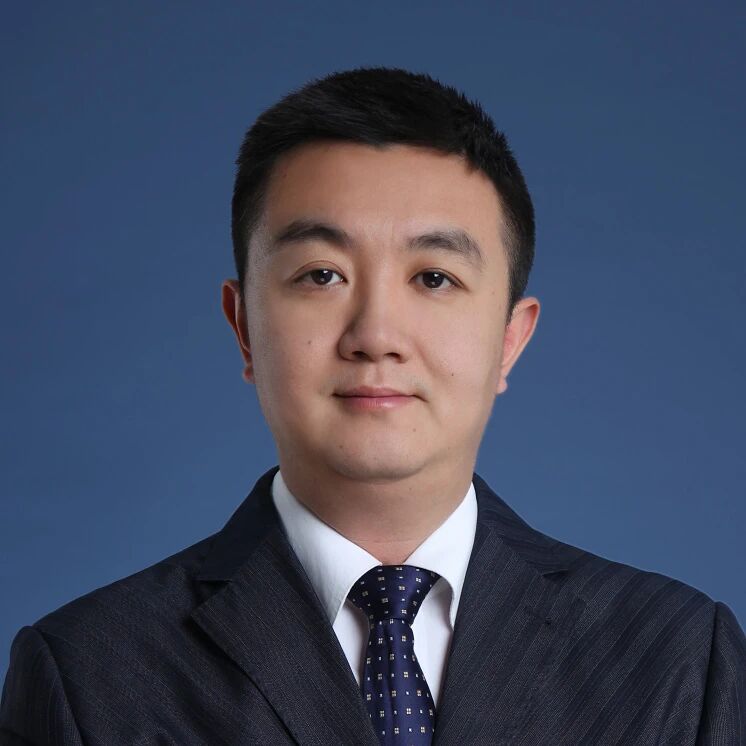
Hong Liang
I have a very interdisciplinary background. My undergraduate degree was in physics at the University of Science and Technology of China, my master's in chemistry at the Chinese University of Hong Kong, and my PhD in biology at the University of Akron in the United States. My postdoc was in computational biology at Oak Ridge National Laboratory, and in 2015 I joined Shanghai Jiao Tong University and began working on AI.
Research software that used to take half a year to learn can now be picked up in three hours with AI. AI has upended traditional research education.
Q1 — The Paper: You studied physics and biology as an undergraduate and master's student. Why did you switch to AI when you went to SJTU?
Hong Liang: At Oak Ridge National Laboratory, I actually did five years of computational work. This field is also called computational biology — it was basically all "hindsight": using computation to explain other people's experimental results after the fact.
But in 2020, AlphaFold came out, and people could use this software to predict protein structures. AlphaFold was a paradigm shift in our field. Before, we were always "hindsight"; AlphaFold could predict before experiments, in other words it could be "foresight," guiding experiments in advance and reducing the trial-and-error cost of experiments.
In 2020, AI protein research had three directions:
The first was structure prediction; the second was de novo design by David Baker's team; the third was directed protein evolution, i.e., protein engineering. We took the third path.
Why the third? Because on the first path — structure prediction — DeepMind had already done an extremely good job, and it's hard for anyone to surpass them. On the second — Baker's de novo design — the academic innovation was indeed excellent, but implementation was very difficult. We followed along for a while, about half a year, and found that the proteins we produced had no function. So we chose the third path.
Q2 — The Paper: Why did the proteins you made have no function?
Hong Liang: At the time, the technology for de novo protein design was still immature. Often the designed proteins couldn't be expressed at all, or if they were expressed, they had a structure but no activity.
Now, as technology has advanced, de novo-designed proteins are gradually starting to solve some problems — but they still can't solve industrial production problems, because they are entirely new proteins that don't exist in nature. Using the high-yield production strains common in biopharmaceuticals today, there's no way to mass-produce them. If you can't mass-produce them, they become extremely expensive. So this direction will remain difficult to industrialize in the short term.
Protein engineering, on the other hand, means changing three to five amino acids in a protein sequence so that it better meets the needs of an application scenario. It could be an antibody, an ADC, a fusion protein, or an industrial enzyme.
Before AI, these were screened out using high-throughput screening. With AI, this process is greatly simplified — only a small amount of experimental validation is needed.
Q3 — The Paper: Why did you think of starting a business in 2021?
Hong Liang: At the time, we had a horizontal collaboration project with GenSci (金赛药业) to design small-molecule drugs against a target. The design worked out, and the experimental validation showed decent results. I had always done basic research, so being able to produce something genuinely useful for real industry opened a new window for me as a basic researcher. "Extremely thrilled" would be the way to describe it — it became a huge driving force. So entrepreneurship started from that point.
Around 2021, we started the company, using AI for protein design. Later we began making products: biopharmaceutical consumables, bio-based materials, enzymes for in vitro diagnostics, and then antibodies, ADCs, and fusion proteins for pharmaceutical companies.
After making a lot of these, I realized it was a real pity that such a powerful tool was in our hands yet only used by our single company.
Riding the rise of "Crawfish," we released this agent, MatwingsVenus™. It's not a simple model — it's a one-stop platform. You can search literature, patents, and market information to find the general direction you want to pursue, then use our design technology and protein models to design the functional protein or enzyme you want. After design, you can directly call our robots to run experiments for you, synthesize it, test its performance — and if performance isn't good enough, it feeds back to the model for optimization until you're satisfied. What you end up with is a functional protein sample — the prototype of a product.
The whole process takes just a few months, dramatically improving efficiency compared with the years it used to take.
Q4 — The Paper: So essentially, the manual work of high-throughput screening has been replaced by AI.
Hong Liang: Right. Before, maybe only one or two research groups at SJTU could do high-throughput screening. Now with AI, every school's research group, even individuals, can do it. Experimental costs and technical difficulty have been dramatically reduced. A person who knows nothing about protein engineering — modification, design, synthesis, detection — can still state their requirements, and our agent and automated lab can interact with you and polish out the protein sample you want. This is a classic democratization of high technology, letting everyone develop biological products on a customized basis.
Q5 — The Paper: Everyone could potentially become a drug developer.
Hong Liang: Science isn't as lofty as we imagine. Once its underlying logic and basic technical skills become standardized actions of AI skills and robotic arms, what everyone needs to do is just state their requirements.
Q6 — The Paper: Without foundational pharmaceutical knowledge, how do you validate whether what you develop is good or not?
Hong Liang: Drugs are quite complex — there are ethical issues, and various complex testing and safety assessment standards. But we don't just make large-molecule drugs; we also do cosmetics, skin-whitening, in vitro diagnostics, detection, and industrial enzyme preparations. Whether these work or not is tested right in our lab, with gold standards.
Q7 — The Paper: What was the design process for this agent?
Hong Liang: We started planning this last August. Our company already had an AI model internally; our technical staff used it to design proteins. To prevent employees from modifying the underlying code, we built a process-driven interface — that was the early prototype of the agent. The idea to build the agent was initiated in August of last year.
Q8 — The Paper: What were the main difficulties in building it?
Hong Liang: When we used it internally, we could teach people hand-in-hand. But once opened to the public, you need to make something with complex functionality easy for everyone — especially people who don't understand it — to pick up, like a point-and-shoot camera. That's not easy; there's a huge amount of engineering involved.
Also, previously fewer than five people in our company used this software. Now we have over 1,000 users. You have to be able to absorb that — with corresponding computing power, experimental robots, and engineering and customer-service teams to handle it.
Q9 — The Paper: Did you ever think about what if it doesn't work out?
Hong Liang: Entrepreneurship can't guarantee success. As long as the company has sufficient funds, you always have to try some directions. The most powerful aspect of this round of AI is the consumer-facing (to C) side.
After the "Crawfish" ecosystem emerged, things that previously seemed lofty — things that required professional teams, professional equipment, and had to be done by major institutes or big-company teams — are no longer what they used to be. We drove the costs down, and you do it yourself according to your needs. I think that's the disruptive essence of AI. Our original motivation for doing this was simple: 1) the tool is so powerful, it's a pity only we use it; 2) if we don't do it, someone else will. Since the industry is destined to be disrupted, we might as well disrupt it ourselves. The most interesting feature of this AI wave is that the top companies are working hardest not on making money, but on doing valuable things — and the most valuable thing is disrupting your current self. Look at Anthropic and OpenAI: their hottest applications right now are AI programming, which is disrupting the entire computer industry. The more you disrupt the existing model, the more valuable you are.
Q10 — The Paper: Does this agent count as a moat?
Hong Liang: If other companies want to do it, engineering still requires a fair amount of time and capability. We've opened up the entire pipeline. Many AI companies can only do the front-end design; those with experimental capabilities may not dare burn the money on AI engineering because they lack confidence. The core purpose of our agent is really to build an ecosystem — the ability to make friends. If more researchers and corporate R&D staff can rely on it, then our ecosystem wins. For vertical AI companies today, the core competitiveness is ecosystem-building — the ability to "make friends."
Q11 — The Paper: When we interviewed you two years ago, you said your main business was protein/enzyme design. Has the business direction shifted now?
Hong Liang: I think Matwings Technology is an AI company. What AI cares most about is not making any particular product, but always staying at the frontier of AI — otherwise a new technology or application could disrupt you.
Through the agent, we contribute our model capabilities and experimental robots outward, letting more people use them to make products, while also forming an ecosystem with them.
Today's AI companies should be data-plus-ecosystem companies. We built an ecosystem, gathered more usage data, our model gets stronger, the ecosystem improves, and the company survives.
If we don't do this, the companies ranked behind Matwings will definitely do it. If they succeed, we become passive.
Q12 — The Paper: Did you have this "AI company" positioning from day one of founding?
Hong Liang: It emerged during the founding process, because you discover your genes are there.
Actually, the protein industry we work in is very broad — from in vitro diagnostics to biopharmaceutical consumables, to industrial enzyme preparations, bio-based materials, and innovative drugs. That's five directions. They all start in the lab, but their manufacturing cycles differ.
Pharmaceuticals require animal efficacy testing, scale-up, safety assessment, and Phase I/II/III clinical trials — the time to market is very long.
In vitro diagnostics is the other extreme: if your molecule performs well, a 5-liter fermenter is enough for one company. So the first thing we brought to market was IVD.
Next came biopharmaceutical consumables, which typically go to hundreds or thousands of liters. That's a bit slower — about a year, because there's pilot-scale validation afterward. For industrial enzymes, you're talking tens of tons, which takes longer — our industrial enzyme project only starts scale-up next month. Bio-based materials can't be solved with tens of tons; you need thousands or tens of thousands of tons. That won't come online until next year, in Sichuan.
But when we first used AI to design proteins, we had no sense of how long the final product's path to market would be. So Matwings' positioning now is to focus solely on the agent — on data and models.
Q13 — The Paper: This wave of AI is a bit like the internet 20 years ago, but the difference is that today's AI attracts far more attention than the internet did in its early days. How do you deal with intense competition?
Hong Liang: Embrace the frontier of AI technology, apply it in a way that doesn't hesitate to disrupt our own model, and tilt resources toward the most outstanding young people.
Q14 — The Paper: You keep mentioning "Crawfish." When did you start using it?
Hong Liang: Around before Chinese New Year. Our students had already been using it and said it was cool, so I tried it out.
I had a student who didn't understand molecular dynamics simulations use "Crawfish" to run molecular dynamics simulation software, and he finished in three hours what used to take us half a year.
Molecular dynamics simulation is a very specialized technical field. During my postdoc in the US, I spent about half a year learning it, then used it to help experimentalists explain mechanisms and published many excellent papers. After returning to China, several students I trained have since become professors elsewhere — they also learned this technology and used it as their livelihood, solving problems for others.
Before, when installing the software and hitting errors during runs, you had to find a senior or an expert and ask for help — very troublesome.
Now, using "Crawfish" to do these things, all the problems still occur. But the large model tells you possible solutions, and you direct the AI to trial-and-error for a few hours and everything gets solved.
Q15 — The Paper: What did you think when you saw this?
Hong Liang: We also did something else: we used a large model combined with experiments to write an excellent biology paper and submitted it to a core biology journal. The publication level of that journal would be enough for an SJTU PhD to graduate. In the past, training a biology PhD took five years, but this paper took us only five days.
So shouldn't we reflect on our education and talent cultivation? What is the underlying logic of R&D? If we turn it into a skill package and an agent platform, then more people can access the kind of education offered by Tsinghua, Peking University, Fudan, and SJTU. If more people can access such educational resources, won't this world produce more outstanding talent creating more personalized products?
AI will eliminate some jobs, but more importantly, products will become increasingly personalized.
Q16 — The Paper: You're also a professor. Has anything changed in how you supervise students?
Hong Liang: Our group's admissions are not limited by discipline.
We have an AI Lab. The lead was born in 1998, and everyone else is born in the 2000s. Computer science majors make up one quarter; the rest include students from physics, chemistry, biology, pharmacy, and even humanities. As long as they're smart, that's enough.
Q17 — The Paper: How do you judge whether someone is smart?
Hong Liang: At this stage, being smart means the ability to define and solve problems — your speed and efficiency in accepting new things and applying new technologies. It's not entirely determined by IQ.
In an era when knowledge and technology rapidly depreciate, experts themselves — those of us with resources — should invest those resources in these smart young people, even teenagers, let them do the work, and ride their coattails.
Our MatwingsVenus™ was developed by a Gen Z lead with 20 people. The students learn on their own, learning alongside the large models. My main job is finding them resources and setting a general direction, ensuring these best brains are matched with the best resources so they can innovate.
Q18 — The Paper: Do you regret starting a business?
Hong Liang: I regret it often. Every week I have moments of wanting to quit, but there's no going back.
First, investors gave us money expecting us to return it tenfold or a hundredfold.
Second, my students and some excellent employees started this business with me — I have a big responsibility to see it through.
Q19 — The Paper: What's the hardest thing?
Hong Liang: Learning fast.
First, you have to learn how to deal with people. Professors like to think about problems on their own, and their interpersonal skills aren't strong. A professor needs independent confidence to achieve what others can't; but making money requires dealing with people, and a company's boss is always the company's biggest business developer. Professors tend to think highly of themselves and can't bend down. The more brilliant a professor is in research, the harder commercial success becomes. Commercialization ultimately means making money; technology is just one element. More important is understanding why a customer absolutely must buy from you — there's a lot to learn here.
It took me a long time to understand one principle: a company is a hexagon. The offense is R&D, production, and sales; the defense is people, finance, and operations — HR, finance, operations. A professor only covers one side, R&D — and often only the front half of R&D. The later process optimization and scale-up in production, the professor doesn't understand either. Professors who start businesses easily bring their students along, but the students don't understand these things either. Professors are used to being the client (party A), but a company is basically always the vendor (party B).
Q20 — The Paper: If another professor is preparing to start a business and comes to you for advice, what one piece of advice would you give?
Hong Liang: Don't start a business, because it's really hard — "too painful to recall." I once traveled to an out-of-town company four or five times for a 100,000-yuan order, and the worst part was I still didn't close it.
But overall it's pain mixed with joy. I'm actually quite grateful to this society. I come from an ordinary laid-off-worker family. When I graduated, going abroad was relatively easy; after returning, I happened to catch the moment when tech entrepreneurship became possible. It gave me the chance to lead a team of nearly 200 people to do something interesting and potentially great. I feel quite lucky. Maybe when I'm old, looking back, I'll think this life has been pretty cool.
Q21 — The Paper: If your company can last 10 or 20 years, what kind of company do you hope it becomes?
Hong Liang: First, surviving and thriving is important.
Intel once had a glorious era — every electronic product, because it had an Intel chip at the bottom layer, carried the "Intel Inside" mark. If one day a "Matwings Inside" logo could appear across the global biological field, that would be remarkable. As the bottom-most layer, it could be a data layer, a model layer, or a protein raw-material layer — but what it ultimately evolves into, I can't see clearly yet.
Q22 — The Paper: In these years of entrepreneurship, have you gained any new fundamental understanding about life?