
Matwings Technology has officially released VenusFold, a general-purpose all-atom biomolecular structure prediction model, along with its open-source code and model weights. VenusFold enables high-accuracy structure prediction for proteins and biomolecular complexes, including protein–small molecule and protein–protein interactions. In evaluations using FoldBench, a systematic benchmarking framework, VenusFold demonstrated leading performance across multiple tasks, including protein–ligand, protein–protein, and protein–nucleic acid structure prediction.
VenusFold is now available on MatwingsVenus™, Matwings Technology's lightweight AI-powered biological design platform. Users can simply enter a natural-language instruction, such as "Use VenusFold to predict the structure of protein sequence XXX," to run structure predictions directly through the platform.
VenusFold is currently available for a limited-time free trial. Researchers and developers are welcome to register and explore its capabilities.
Try it now: https://matvenus.com/
Open-source resources: See links at the end of this article.
01 | FoldBench Benchmark: Leading Performance Across Multiple Tasks and Near-Experimental Accuracy on Key Targets
Protein structure prediction is a fundamental tool for understanding molecular mechanisms and accelerating drug discovery. From target identification and binding mode analysis to enzyme engineering and antibody optimization, accurate structural information plays a critical role in downstream experimental success and R&D efficiency.
FoldBench is a low-homology benchmark published in Nature Communications in 2026. It covers six categories of protein–molecule interaction interfaces and protein monomers, using standardized sampling budgets, multiple sequence alignment (MSA), and template strategies.
Matwings Technology evaluated VenusFold alongside AlphaFold 3, Protenix v2, Boltz-2, Chai-1, RoseTTAFold3, OpenFold3, OpenDDE, and ESMFold2 under the same benchmarking framework.
VenusFold delivered strong results on the primary protein–ligand prediction metrics, achieving an average lDDT-PLI score of 0.80 and a docking success rate of 69.78%, placing it among the top-performing models evaluated.
These results suggest that VenusFold can predict not only plausible overall molecular folds but also highly accurate geometries at critical ligand-binding interfaces, providing valuable structural insights for structure-based drug design and molecular recognition research.
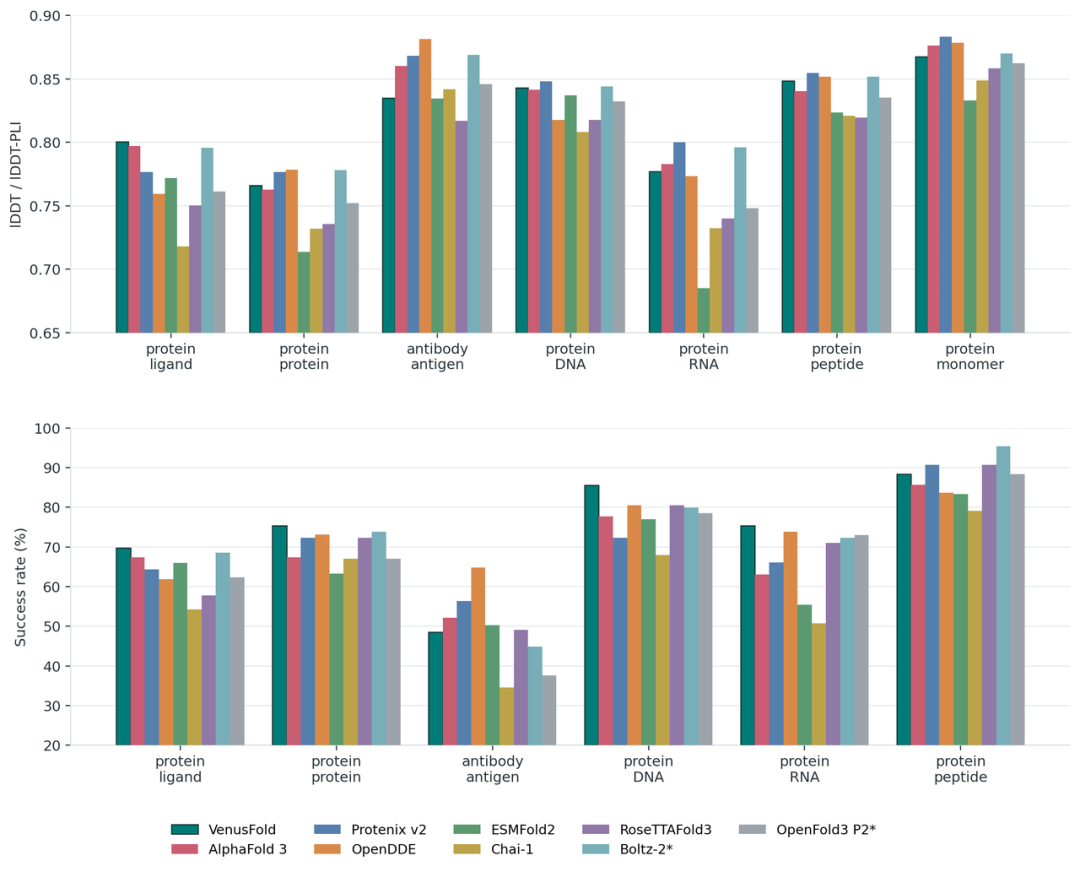 Figure 1: Performance Comparison of VenusFold and Other Models on FoldBench
VenusFold also demonstrated strong small-molecule binding pose prediction capabilities across several drug-relevant systems, including bacterial enzymes, antimicrobial resistance targets, and epigenetic regulatory proteins.
Figure 2 presents three representative protein–ligand complexes in which VenusFold achieved high prediction accuracy:
-
Campylobacter jejuni lytic transglycosylase (PDB: 8GFD): Ligand RMSD of 0.98 Å.
-
Pseudomonas aeruginosa metallo-β-lactamase VIM-1 (PDB: 8PGM): Ligand RMSD of 1.36 Å.
-
Candida glabrata Bdf1 bromodomain (PDB: 8R6J): Ligand RMSD of 1.12 Å.
All three predictions achieved near-experimental accuracy in ligand positioning.
By comparison, AlphaFold 3 produced ligand RMSD values of 18.02 Å, 9.02 Å, and 10.99 Å, respectively, on the same systems. Its predicted ligand poses deviated substantially from the experimentally determined conformations and did not accurately reproduce the observed binding modes in these cases.
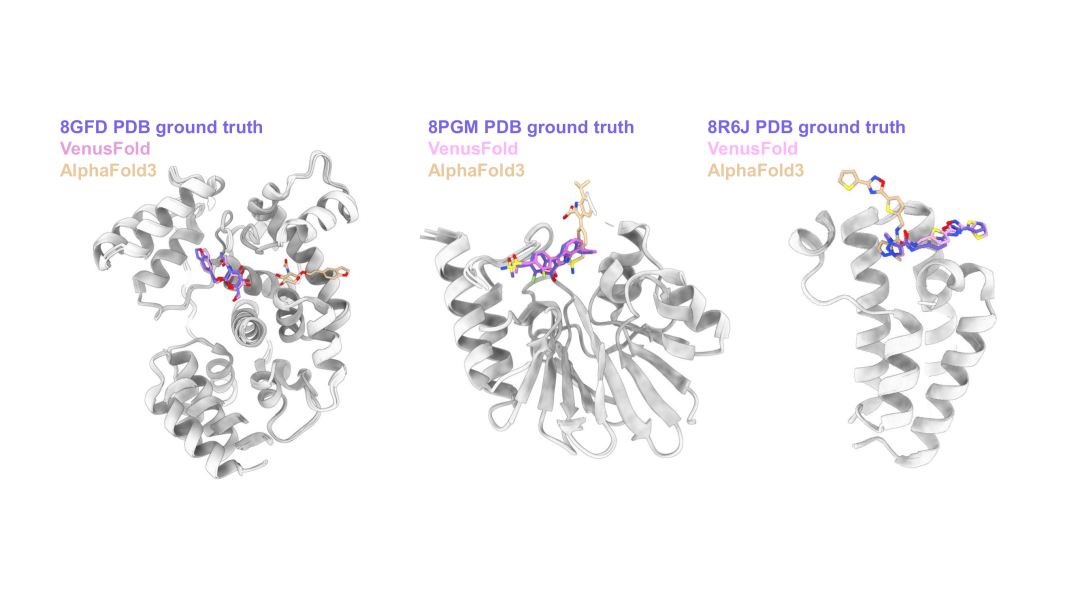
Figure 2: Representative Protein–Ligand Structure Prediction Results
02 | Two Training Innovations Improve Interface Prediction Accuracy
VenusFold is built upon an all-atom diffusion framework similar to those used by AlphaFold 3 and Protenix.
Conditioned on multiple sequence alignment (MSA) and template features, the model iteratively updates molecular representations through Pairformer before generating the joint all-atom coordinates of biomolecular complexes using an atom-level diffusion model.
Rather than introducing an entirely new architecture, VenusFold focuses on refining and optimizing training strategies within an established framework.
Two key innovations target diffusion loss design and matrix parameter optimization:
-
Min-SNR Diffusion Loss Weighting: Building on EDM preconditioning, VenusFold applies a signal-to-noise ratio (SNR) cap of γ = 5 to high-SNR samples. This prevents low-noise samples from dominating gradient updates, allowing denoising tasks of varying difficulty to contribute more evenly during training. The approach improves the model's ability to learn complex molecular interface structures.
-
Muon Optimizer: VenusFold adopts Momentum Orthogonalized by Newton–Schulz (Muon) for matrix parameters in modules such as Pairformer and MSA, while retaining AdamW for other parameters. This strategy helps prevent a small number of high-gain directions from dominating optimization, improving training stability and efficiency.
All-atom structure prediction is evolving beyond generating complexes that merely appear structurally plausible toward producing predictions that are sufficiently reliable at critical molecular interfaces.
The FoldBench comparisons demonstrate that under a standardized evaluation protocol, training strategies themselves can be a key factor in improving interface prediction accuracy.
By incorporating Min-SNR and Muon to refine diffusion training and matrix parameter optimization, VenusFold achieved leading or joint-best results across multiple tasks, including protein–ligand and protein–nucleic acid prediction.
These improvements also provide a reproducible technical approach for future model scaling, expanded representation capacity, richer training datasets, and more rigorous generalization evaluations.
03 | Try VenusFold for Free on MatwingsVenus™
For most academic and industrial researchers, the ultimate goal is not simply to download model weights and configure GPU environments, but to integrate structure prediction into complete workflows for protein design, enzyme discovery, directed evolution, and experimental validation.
Developed around proprietary AI models and intelligent agents, MatwingsVenus™ is a lightweight AI-powered biological design platform built to address this need.
Through natural-language interactions, users can define research objectives while the platform automatically decomposes tasks and orchestrates capabilities such as structure prediction, sequence analysis, directed evolution, enzyme discovery, and database retrieval. It also supports coordination with wet-lab experiments and expert assistance.
Alongside the release of the VenusFold technical report, its structure prediction capabilities are now available to all MatwingsVenus™ users.
Whether you are an academic researcher, an industry R&D scientist, or a biotechnology enthusiast, you are welcome to explore the MatwingsVenus™ AI agent.
Get started: https://matvenus.com/
Looking ahead, Matwings Technology will continue advancing its models for biomolecular structure and function prediction, improving their practical deployment and strengthening the integration of specialized AI models with the MatwingsVenus™ agent platform to support molecular mechanism research and drug discovery.

Figure 3: MatwingsVenus™ Platform Homepage
Resources
-
Technical Report: VenusFold Improves Biomolecular Interface Prediction through a Refined Training Strategy (Matwings Technology Technical Report)
-
Source Code: https://github.com/ai4protein/VenusFold
-
Model Weights: https://huggingface.co/AI4Protein/VenusFold
-
Try MatwingsVenus™: https://matvenus.com/