
On November 24, 2026, OpenAI released new research showing that out of 322 small binding proteins (minibinders) designed with the participation of GPT-6.2, 35 demonstrated binding to their intended targets in wet-lab validation — an approximate 10.9% hit rate. Almost simultaneously, Lingang Laboratory and collaborating institutions introduced FrontierDrugBench, a systematic benchmark evaluating frontier general-purpose large language models (LLMs) across drug discovery and development tasks.
As general-purpose LLMs begin to encroach on specialized protein design, how is the competitive landscape in AI-driven drug discovery shifting? And what role will domain-specific biological AI models play going forward?
01 Can GPT-6.2 Actually Design Proteins?
Historically, complex protein design has relied on specialized models—such as RFdiffusion for structure generation and ProteinMPNN for amino acid sequence design. OpenAI’s recent study points to a new technical possibility: leveraging general-purpose reasoning and coding capabilities in GPT-6.2 to generate candidate protein structures, yielding experimental binding evidence across five targets.
However, one critical detail stands out: across the 322 minibinder experiments, GPT-6.2 primarily handled backbone generation, while subsequent sequence design and candidate filtering still relied on specialized tools like SolubleMPNN. In other words, while general-purpose models are pushing past traditional boundaries, these results still depend on close collaboration with domain-specific models.
.png)
02 Inside the Latest AI Drug Discovery Benchmark:
How Do Specialized Models Hold Up?
Meanwhile, FrontierDrugBench offers a broader lens into the scientific capabilities of general-purpose AI across the life sciences. Jointly launched by Lingang Laboratory and partner institutions, the benchmark spans disease biology, molecular biology, cell biology, animal studies, and clinical research to evaluate scientific prediction across the drug R&D pipeline. Beyond overall LLM rankings, its head-to-head comparisons on specialized tasks raise a key question: as the scientific reasoning of LLMs advances, can models purpose-built for biological problems like protein engineering maintain their edge?
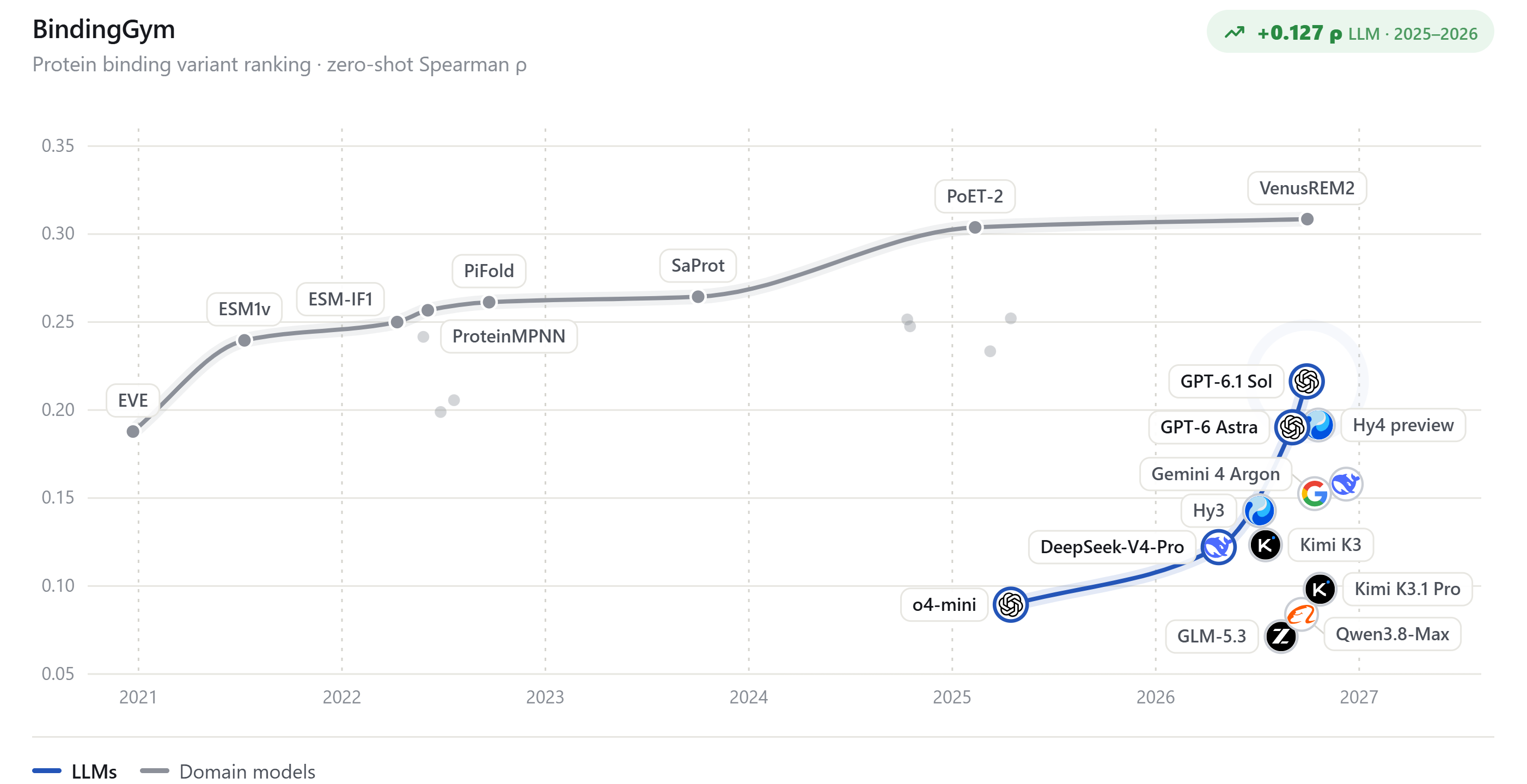
In the latest leaderboard, the specialized model VenusREM2 achieved a Spearman correlation coefficient of approximately 0.308, ranking first among the specialized models featured and outperforming general-purpose models shown in the comparison, such as GPT-6.1 Sol.
VenusREM2 is a specialized model dedicated to protein mutation effect prediction. When researchers seek to modify a protein sequence to improve performance, the model integrates sequence, structural, and evolutionary information to predict the functional impact of different mutations, helping prioritize candidates worth advancing to wet-lab testing. In the development of antibodies and other therapeutic proteins, this capability provides computational guidance for optimizing properties such as binding affinity, enabling more targeted protein engineering.
The benchmark underscores a clear trend: while general-purpose models are rapidly expanding their scientific breadth, domain-specific models engineered for targeted research tasks continue to hold a distinct competitive advantage.
03 As General AI Grows Stronger,
What Does Life Sciences R&D Actually Need?
In real-world AI drug discovery and protein engineering, researchers need far more than candidate molecules generated by a single model—they need integrated workflows spanning property prediction, experimental validation, and continuous optimization. Orchestrating general-purpose AI, specialized models, and wet-lab resources is fast becoming a defining priority for next-generation intelligent R&D platforms.
Guided by this vision, Matwings Technology has built an integrated technical stack spanning protein data, AI models, scientific research agents, and experimental validation:
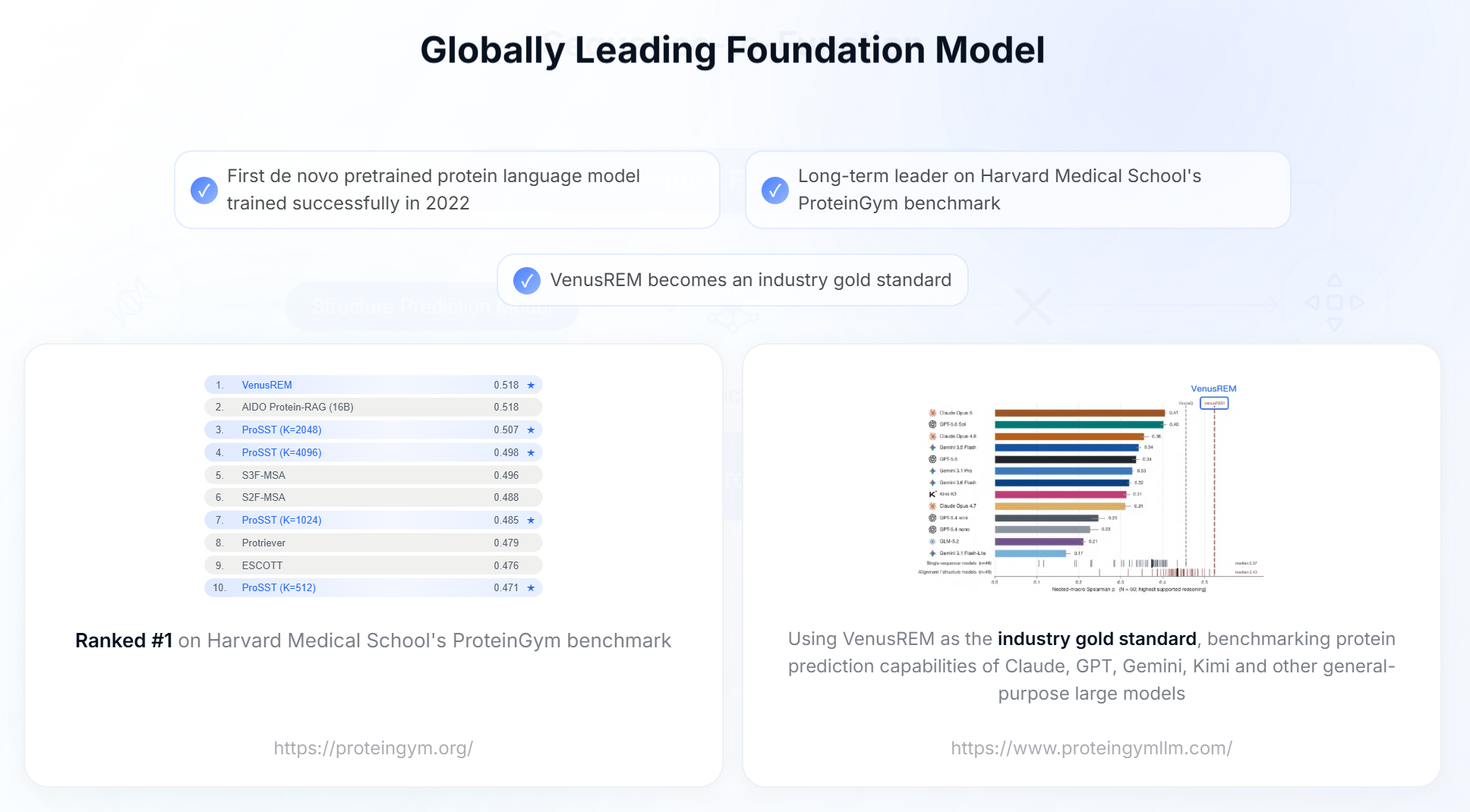
- Domain-Specific Foundation Models: Matwings continuously develops the Venus series of protein AI models, covering protein function prediction, AI-directed evolution, enzyme mining, and structure prediction. Within this suite, the VenusREM series focuses on mutation effect prediction—fusing sequence, structural, and evolutionary signals to guide functional optimization—and has demonstrated strong competitiveness in international public benchmarks.
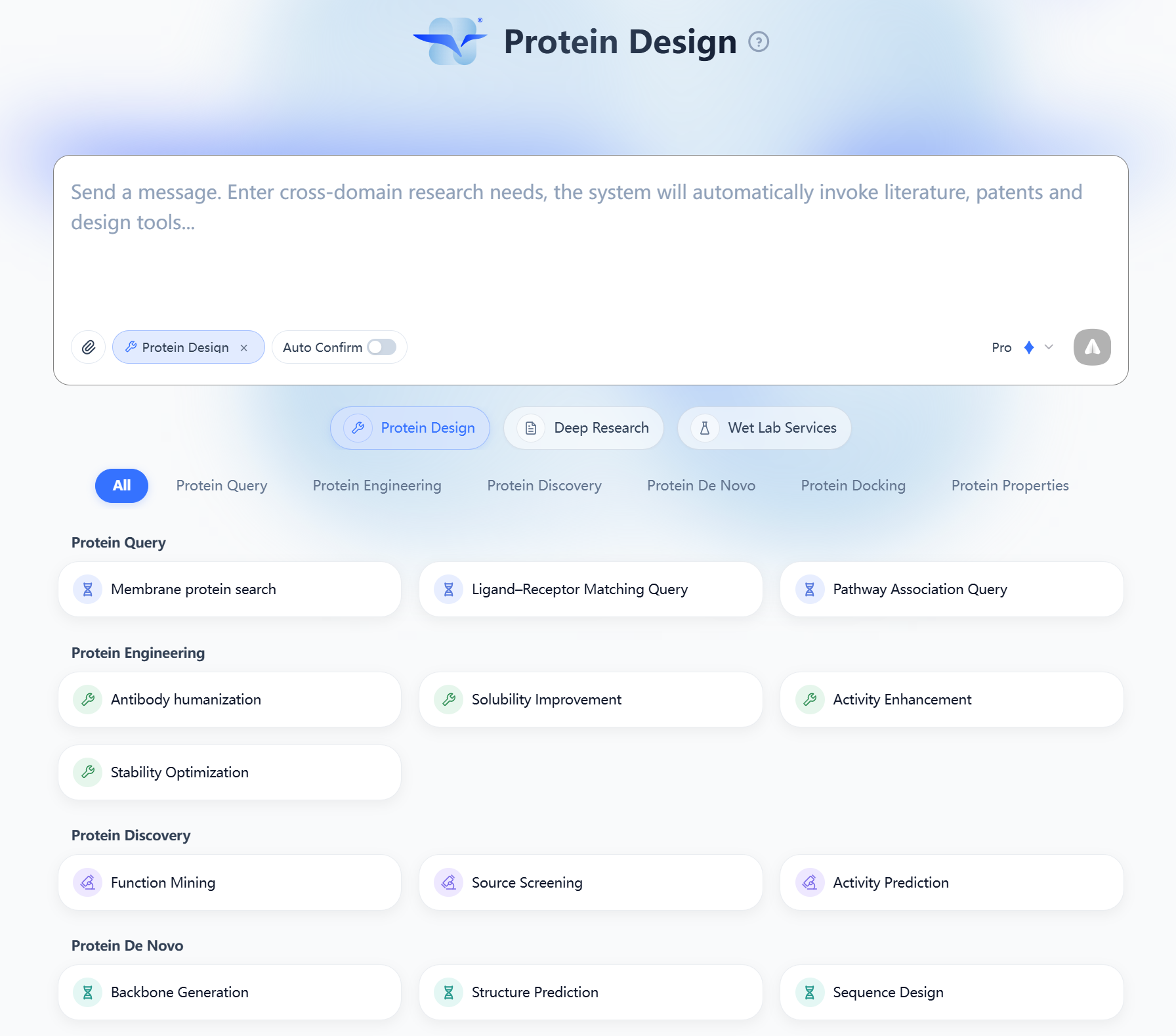
- Scientific Research Agent Platform: Matwings launched MatwingsVenus®, a scientific research agent that organizes specialized databases, proprietary models, mainstream computational engines, and experimental data into conversational, iterative R&D workflows. The platform covers the entire research lifecycle, from data retrieval and experimental protocol design to specialized model execution, result analysis, and report generation. (Sign up for a free trial: https://matvenus.com/en/sign-up)
- Private Deployment & Closed-Loop Wet-Lab Integration: Matwings offers private deployment for research agents as well as AI-driven lights-out laboratory solutions, helping organizations connect computational design directly with automated experimental platforms to accelerate dry- and wet-lab workflows through closed-loop iteration.
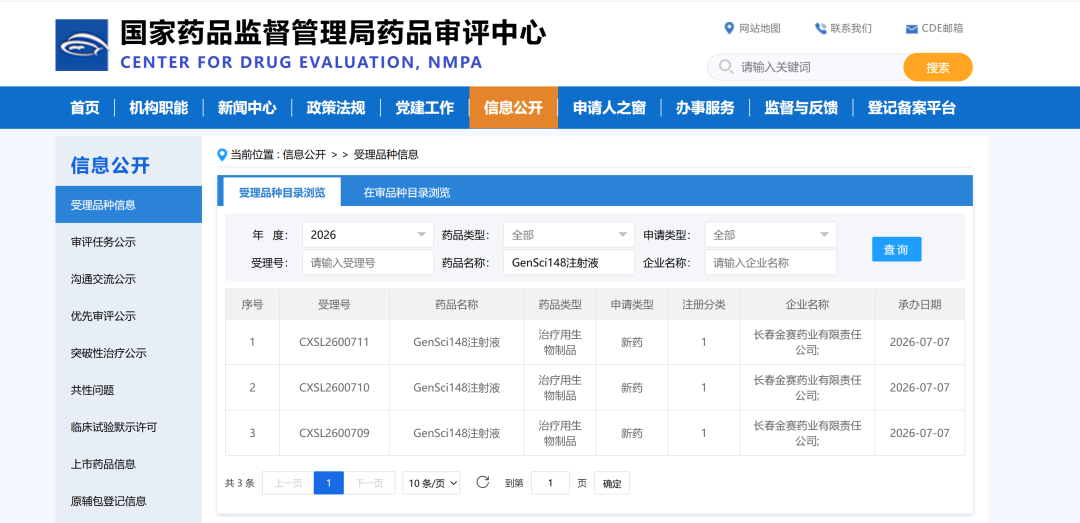
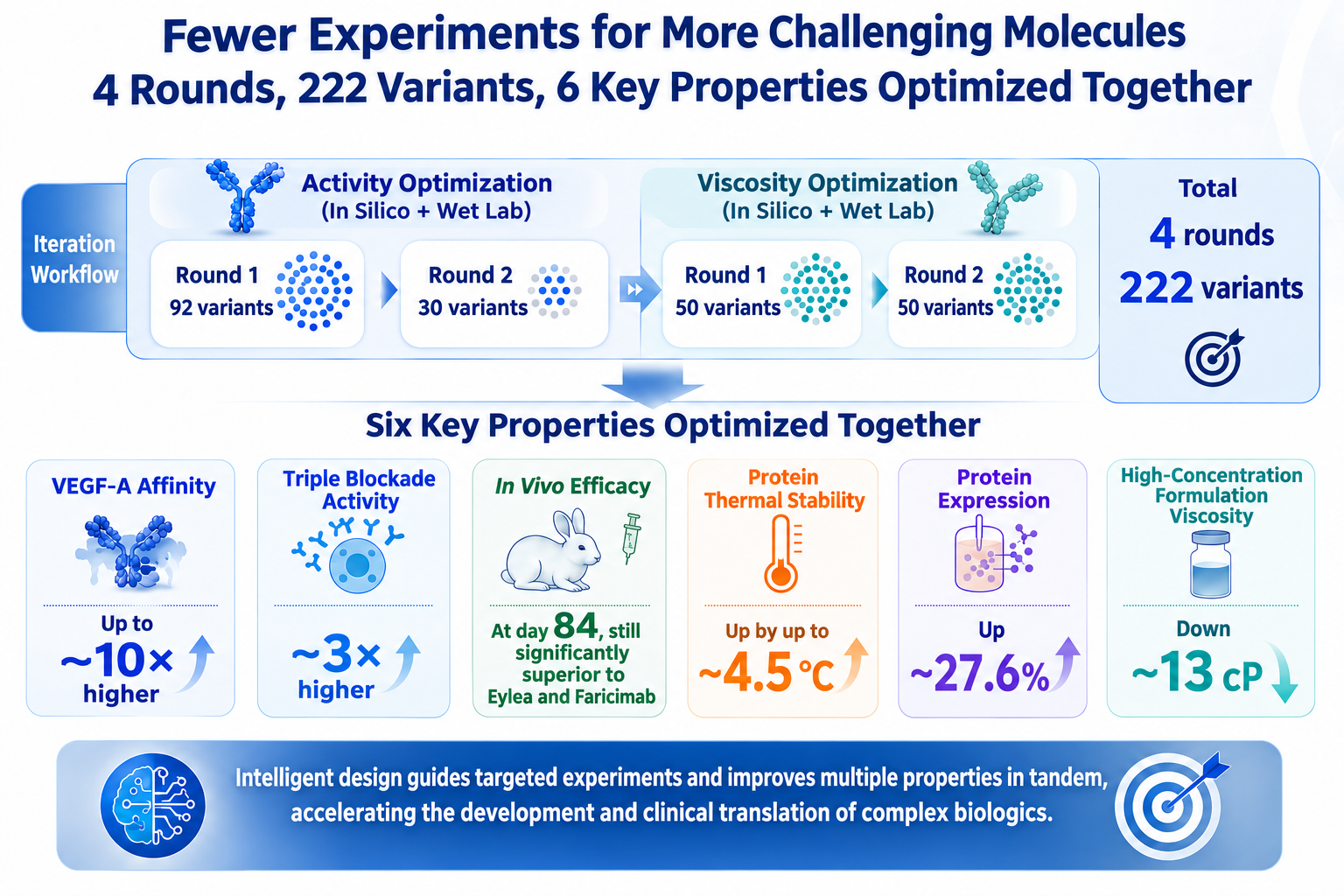
For example, during the molecular engineering optimization of GenSci148, an innovative ophthalmic biologic developed by GeneScience Pharmaceuticals (GenSci), Matwings conducted four rounds of AI-driven computational design paired with wet-lab validation, evaluating a cumulative total of 222 protein variants across functional activity, stability, and formulation properties. Investigational New Drug (IND) applications for GenSci148 across three indications received regulatory clearance in 2026, with clinical safety and efficacy to be evaluated in subsequent trials. This case illustrates how AI protein design translates into real-world biologics engineering—and underscores that model capabilities must be tightly coupled with specific R&D objectives and experimental validation to deliver meaningful outcomes.
The future of AI in drug discovery is unlikely to be a simple zero-sum replacement of specialized models by general-purpose LLMs. Instead, progress will come from intelligent agents that bridge diverse AI capabilities with experimental workflows, embedding AI deeper into the fabric of life sciences R&D.
As general-purpose AI continues to expand its frontiers, Matwings Technology will continue advancing specialized protein AI models, scientific research agents, and integrated dry-wet lab technologies—exploring new applications across protein engineering, innovative drug discovery, and biomanufacturing.
Partner with Matwings Technology To explore collaborations in AI protein design, private deployment of scientific research agents, or AI lights-out laboratory solutions, please reach out to our team:
- Phone / WeChat: +86 137-6177-1520
- Email: mkt@matwings.com
References